
This Designer Collaborated With Her Parents on The Most Charming Maine Summer Cottage
The 1908 property has only had four owners.
Published: June 24, 2026 (www.housebeautiful.com)
Author: Alyssa Longobucco
Photos By: Sean Litchfield
Some designers fall in love with interiors through osmosis, connecting a love of redecorating their childhood bedrooms to their eventual career doing the same thing, only on a much larger scale. Others are seduced by the feeling of what “home” represents—and fueled by chasing that intangible thread into adulthood.
As the daughter of English parents who seemed to be perpetually in the middle of a renovation, Laura Keeler Pierce spent her childhood moving from house to house, trailing her father through showrooms and construction sites, while watching her mother transform rooms through decorating. “My father has an architectural mind and instinctively understands how spaces should relate to one another,” the Keeler & Co. founder says. “My mother has an extraordinary gift for decorating.”
While it probably felt like little more than an exciting and unusual childhood at the time, Pierce now recognizes the masterclass she received on the art of creating a true family home. It was those lessons that came flooding back when she and her family purchased Forest Ledge, a 1908 summer cottage perched above Seal Harbor on Maine's Mount Desert Island. The eight-bedroom home had watched more than a century of life unfold against a backdrop of granite cliffs, salt air, and sweeping views of the Cranberry Islands, so when Pierce and her parents became only the fourth owners in the home's history, they weren't looking to reinvent it. They were looking to listen.
“If there is one story I tell friends about Forest Ledge, it is that the house already knew what it wanted to be,” Pierce says. “We simply listened—to the architecture, to the landscape, and to our family's history—and allowed it to continue evolving.”
Over the course of two years, Pierce once again found herself working alongside her parents, this time to reimagine the 7,800-square-foot property as a vessel for new family memories. The goal wasn’t simply to preserve the historic house but to create a home where three generations could spend months together each summer while still enjoying moments of privacy and independence. Separate wings, kitchens, and living spaces allow everyone—from grandparents to grandchildren—to coexist comfortably, while a network of connecting doors keeps family life flowing naturally.
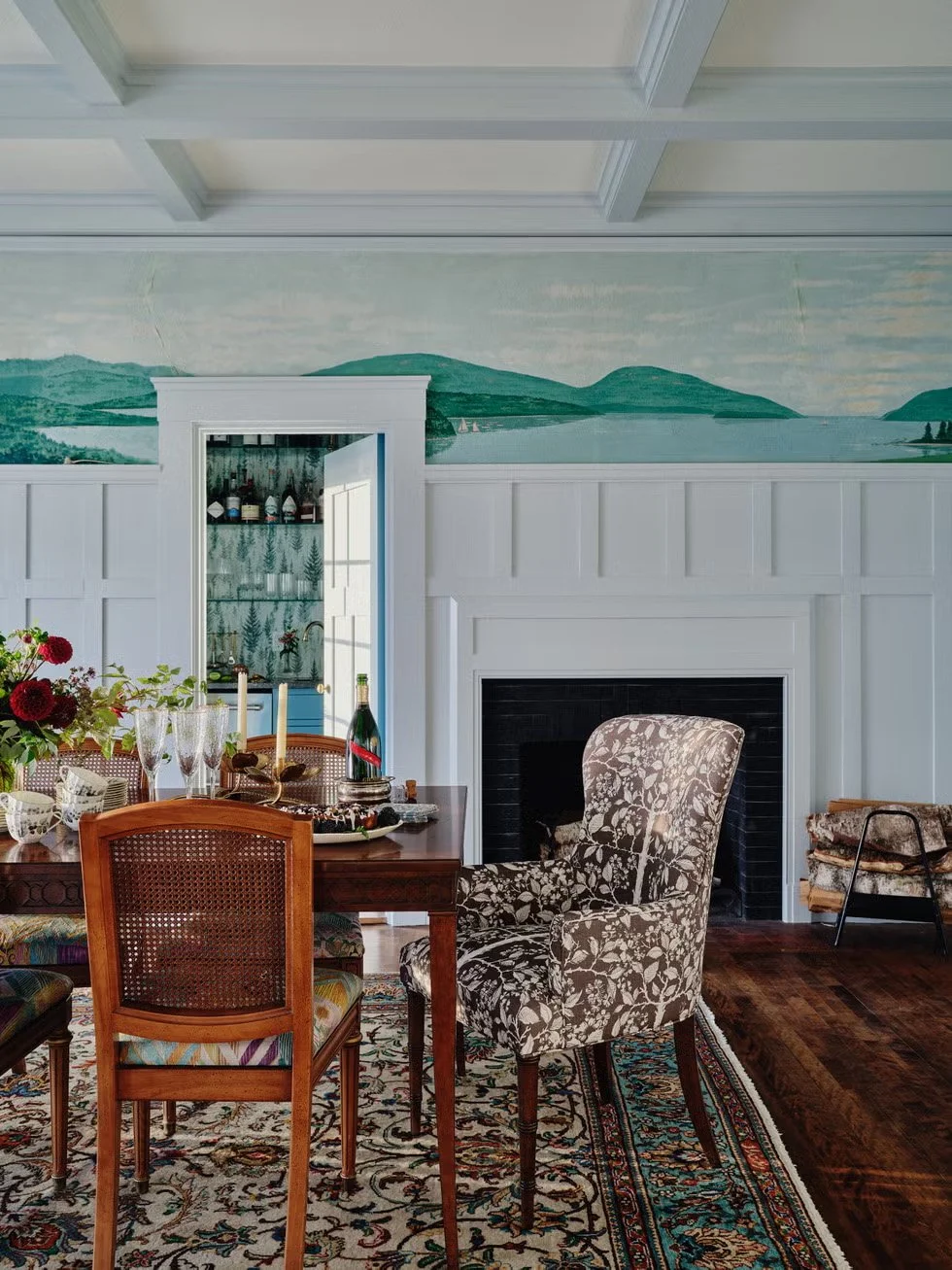
The transformation required a careful reconsideration of nearly every room. Former sitting rooms became dining spaces, service areas evolved into breakfast nooks, and forgotten corners were repurposed to better suit modern life. Yet it was the home’s soul that remained untouched. Original furnishings were restored rather than replaced. A hand-painted dining room mural depicting scenes of nearby Seal Harbor and Somes Sound, beloved by the locals, was preserved. Even fragments of whimsical 1960s poodle wallpaper were framed and rehung as a tribute to the home’s past.
“The property feels deeply connected to its surroundings and embodies the timeless character of one of Maine's historic summer communities,” Pierce adds. “With Forest Ledge, our goal was never to create something that felt of-the-moment. We wanted the house to feel nostalgic today and just as meaningful fifty years from now. I often think about my son, Percy, walking into his childhood bedroom decades from now and finding that the house still feels familiar, comforting, and unmistakably itself.”
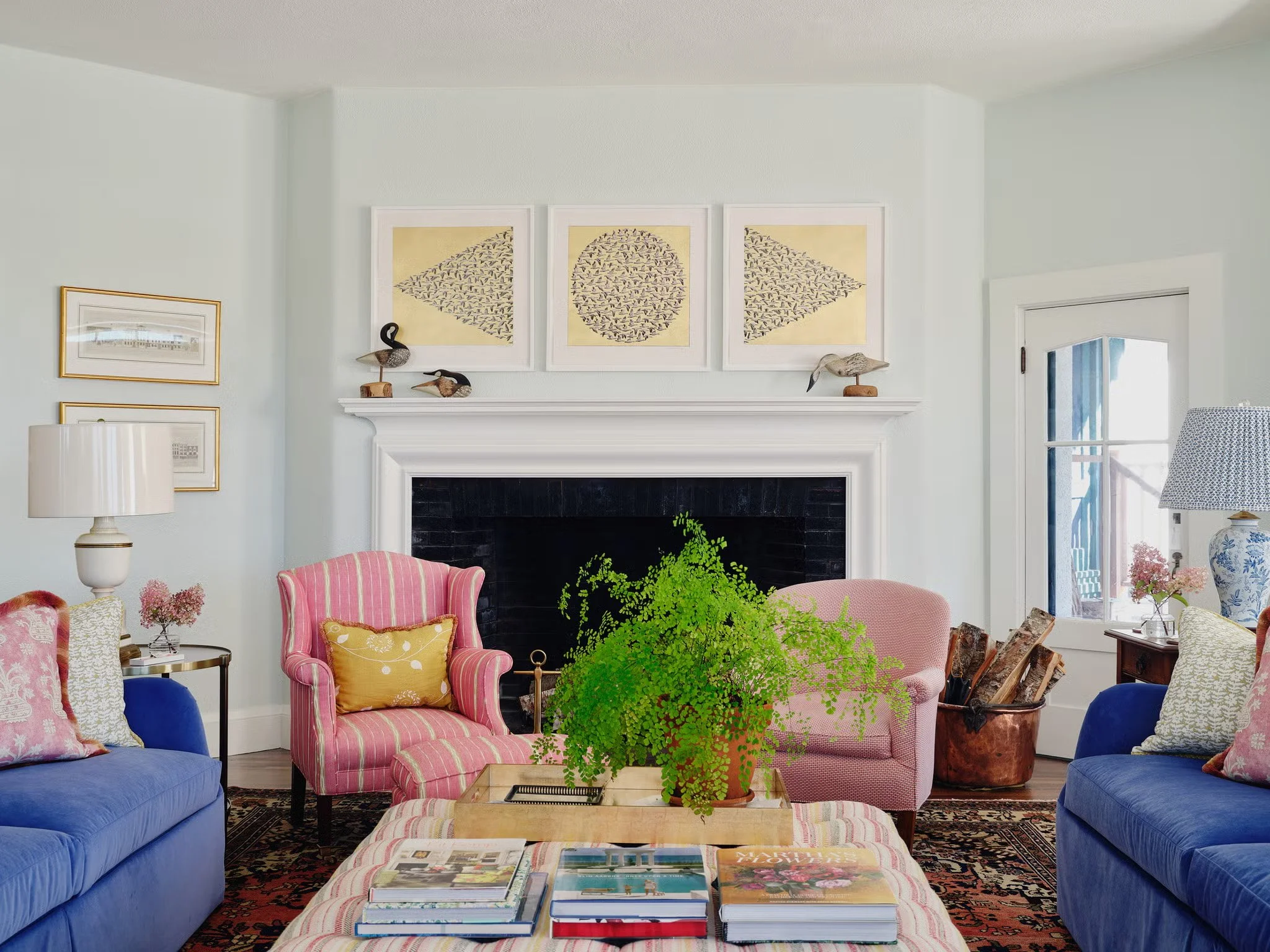
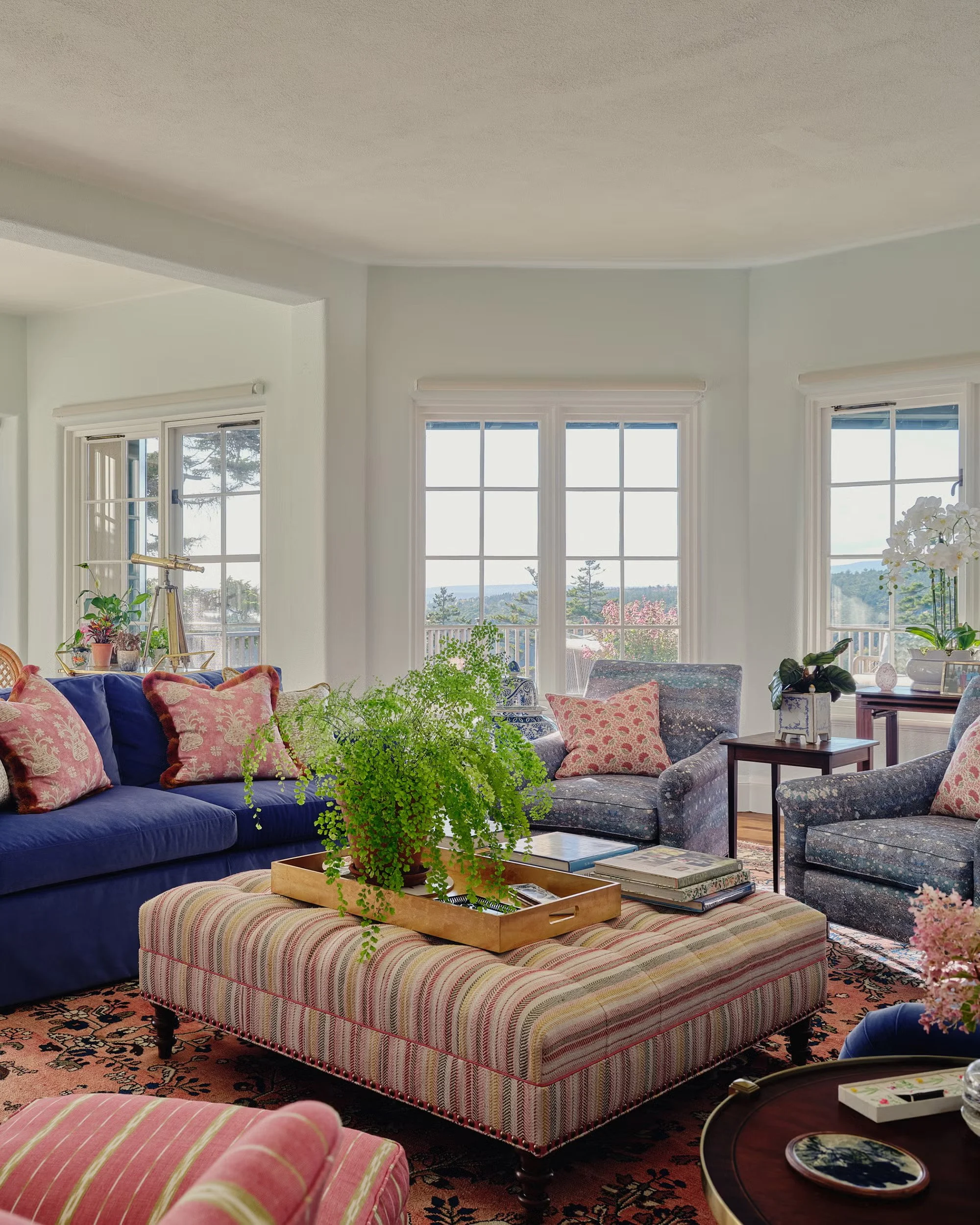
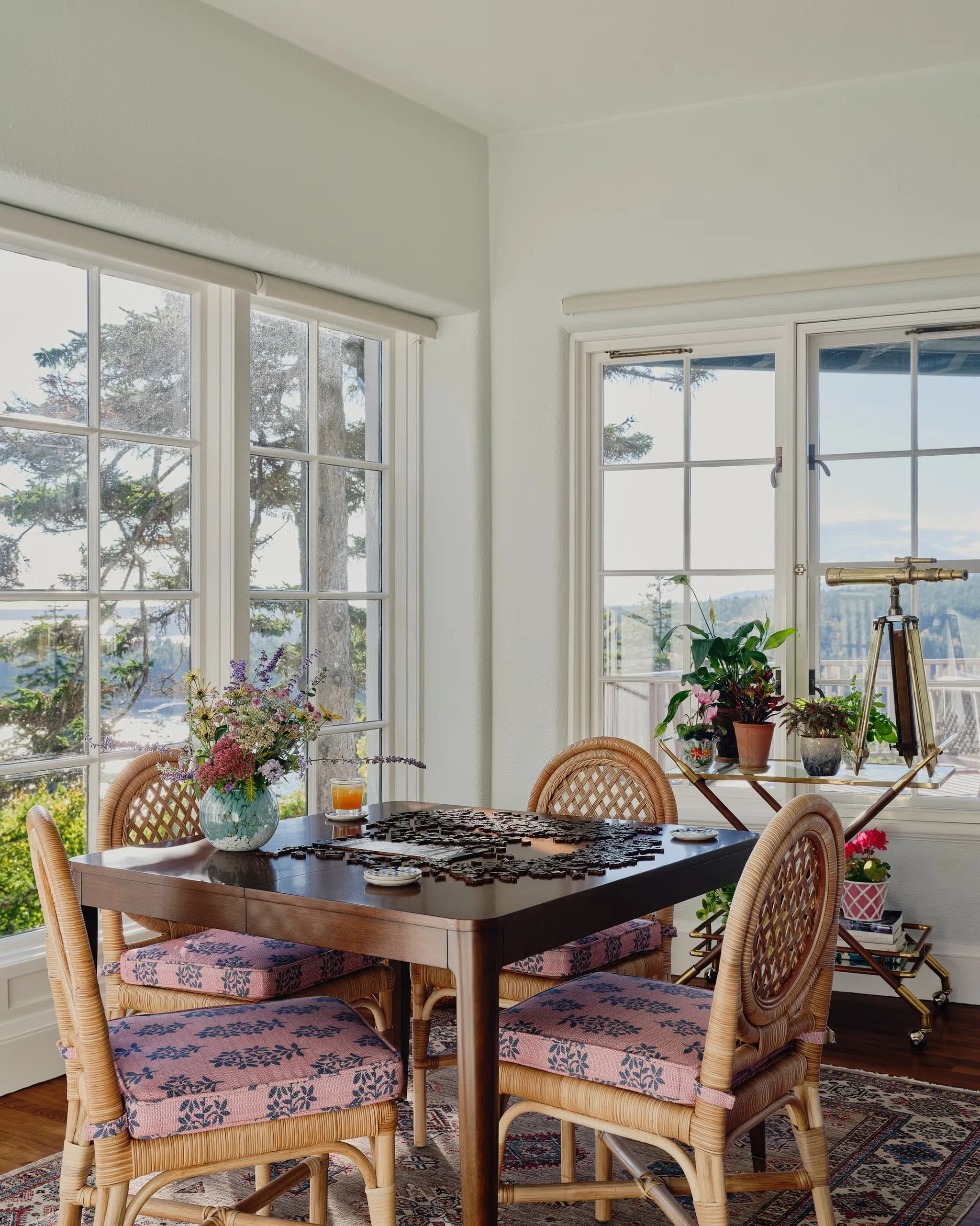
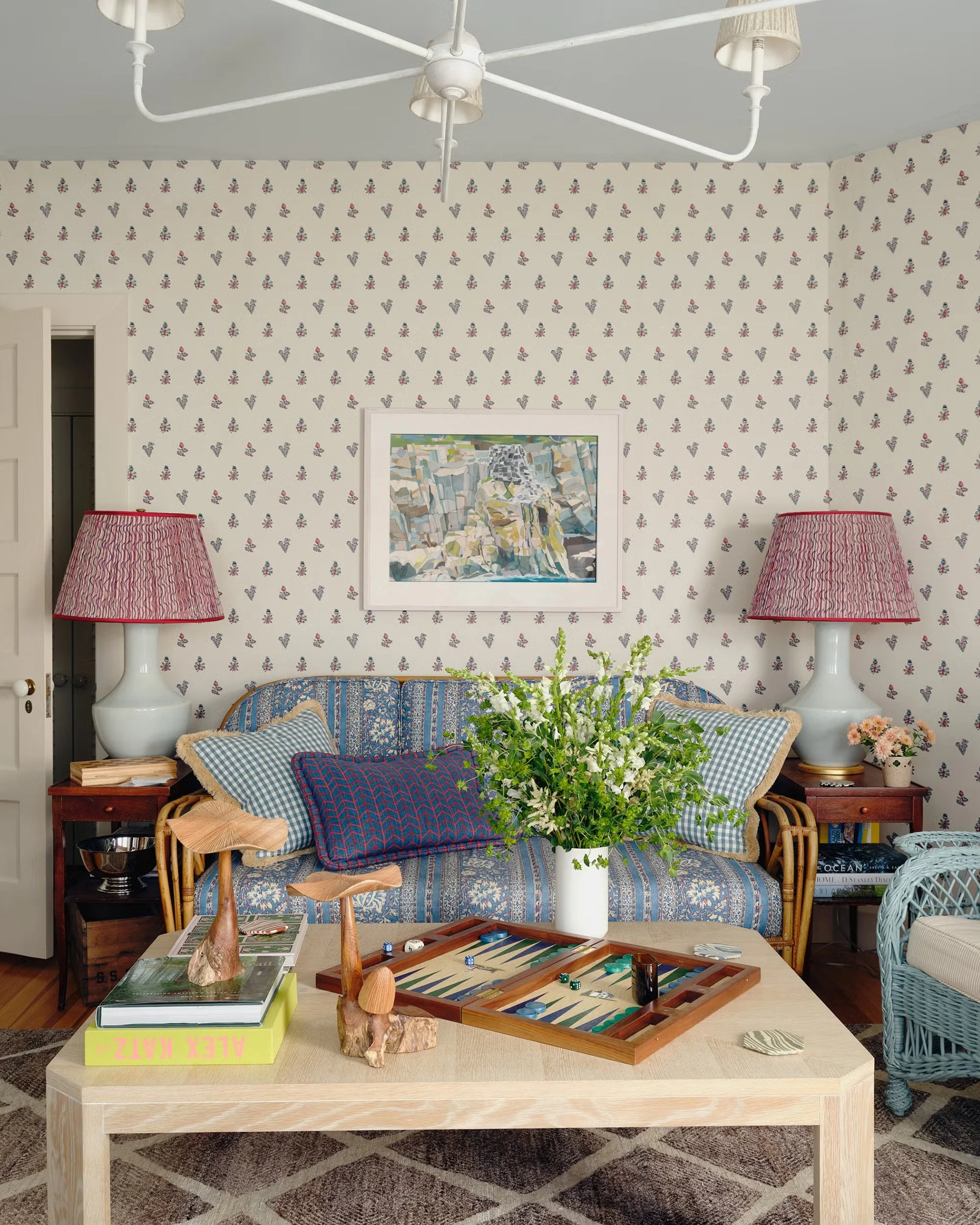
“Softly layered textiles, antique rugs, and a palette of coastal blues and pinks—my mother's favorite color—bring warmth and personality to the space without competing with the view,” adds Pierece. A nearby game table extends the room's function, creating a flexible space for everything from quiet afternoons to large family gatherings.
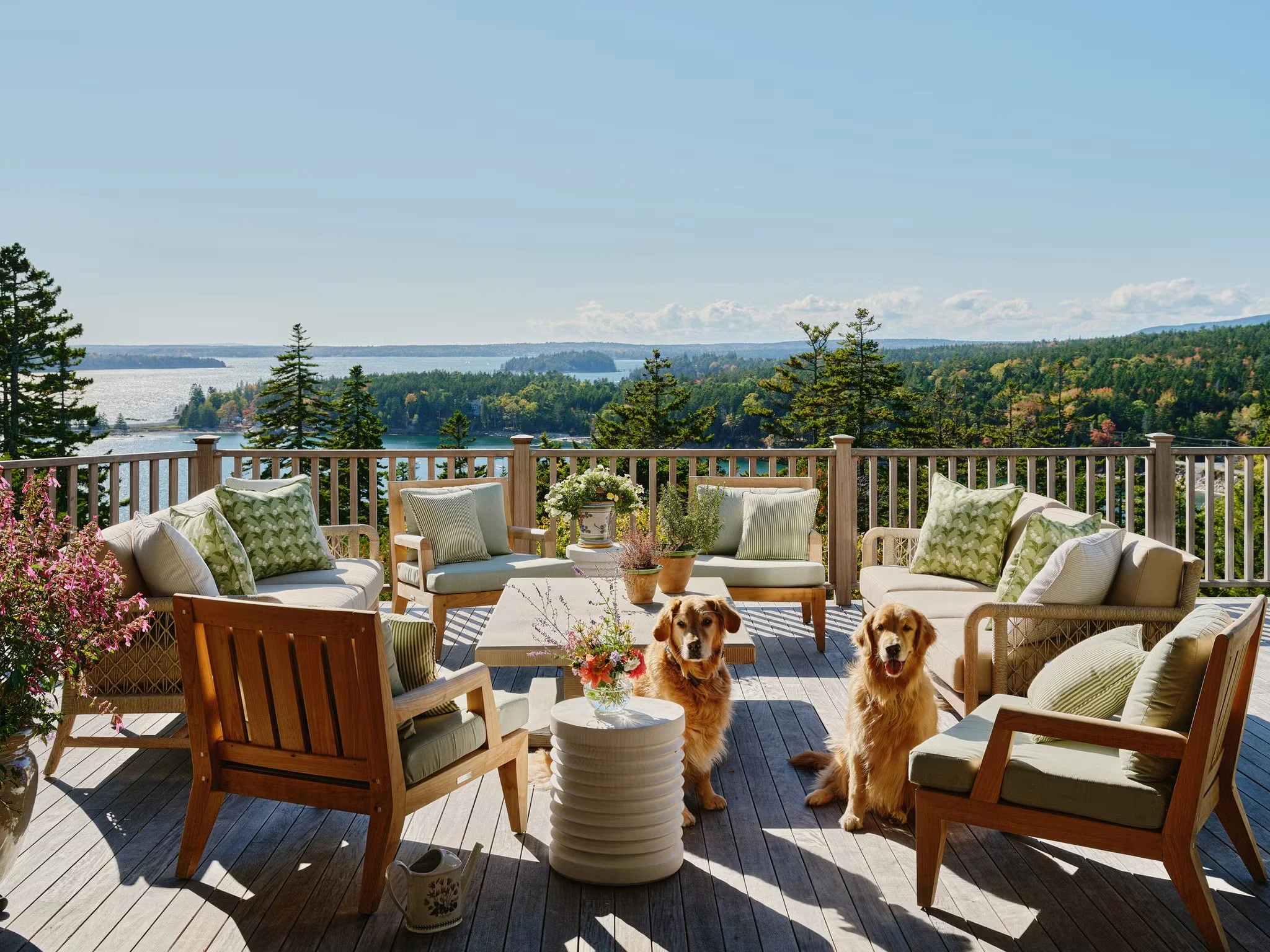
“The deck is the heart of Forest Ledge and one of the primary reasons our family fell in love with the house,” says Pierce. “Perched atop a granite ledge and overlooking the pine trees and water beyond, it offers an extraordinary connection to the landscape that defines life in coastal Maine. More than an outdoor room, it’s where some of our favorite memories are made and where the beauty of Forest Ledge is felt most deeply.”
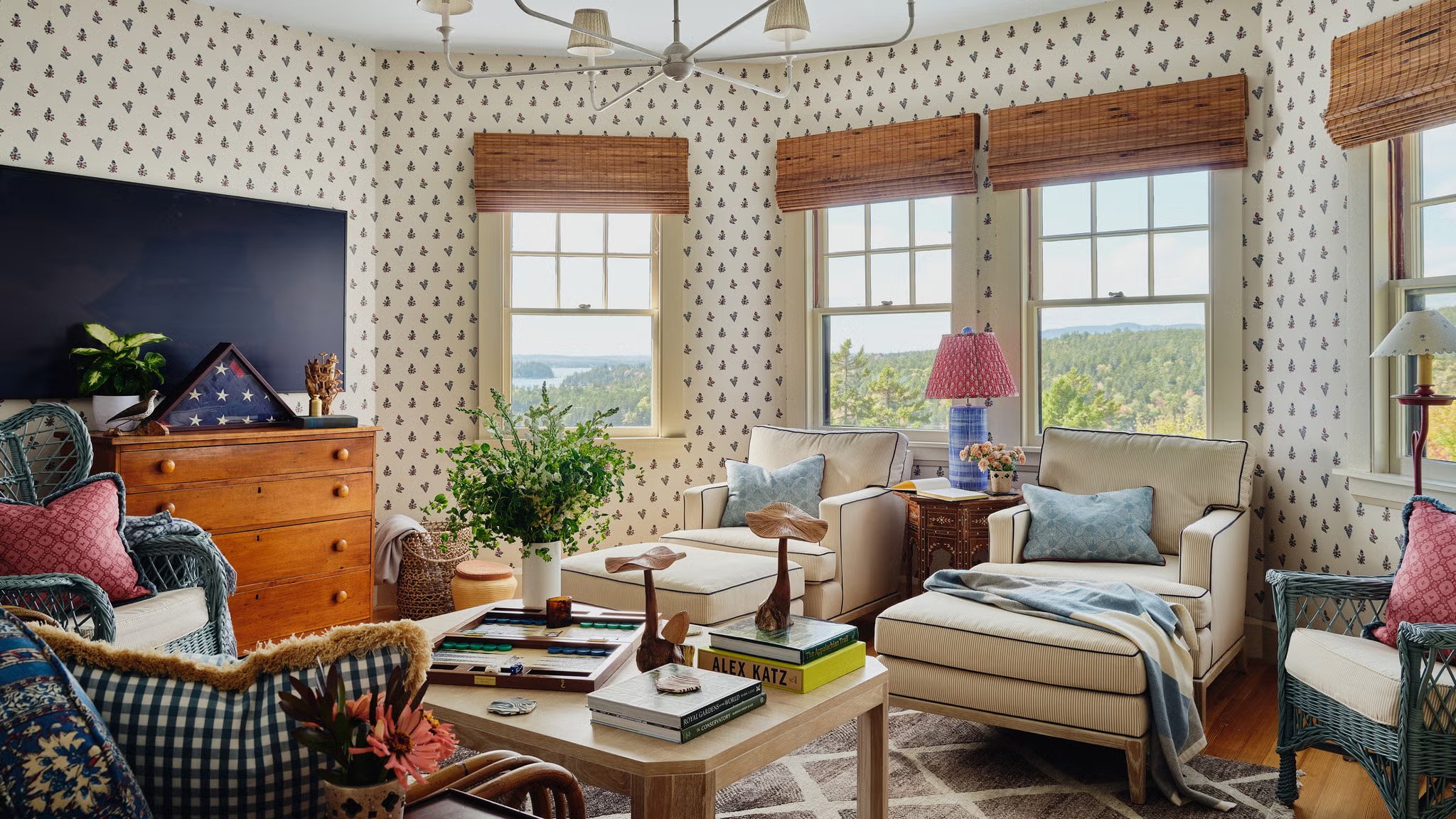
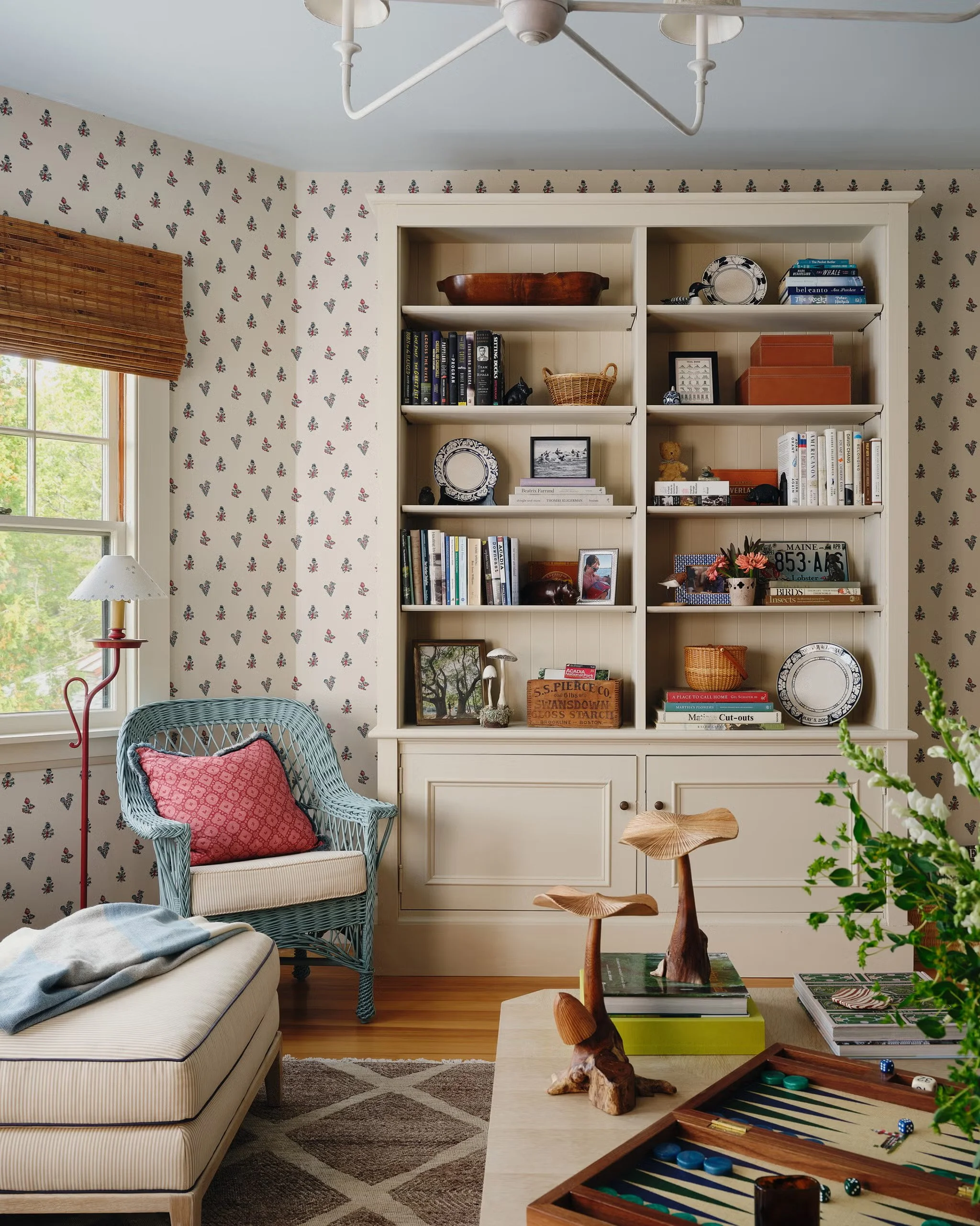
With a soft palette and comfortable furnishings, the upstairs sitting room is meant to be a reprieve from the bustle of vacation life, granting family members a spot to catch a nap or score some downtime. “Separated from the main entertaining spaces, it offers a more intimate setting that reflects the relaxed rhythm of life,” adds Pierce.
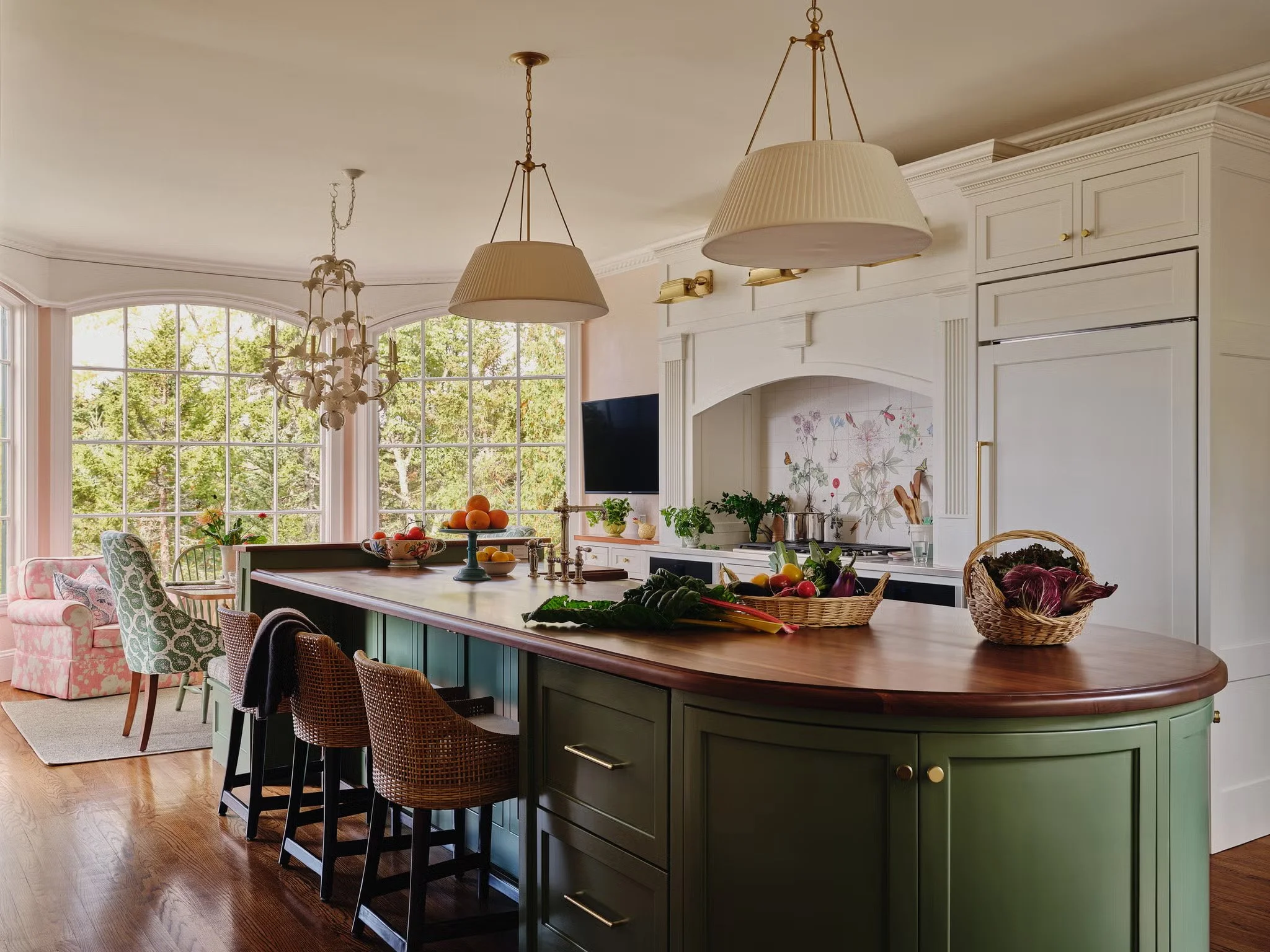
To echo the soft curves seen throughout the rest of the house, Pierce designed an island with a gently rounded edge, a feature she calls one of the most “distinctive design decisions” in the home. “Rather than introducing something that felt overly contemporary, we wanted the kitchen to reflect and reinforce the architectural language that already existed throughout the house,” she adds.
Every decision was made with gathering in mind, and Pierce worked to craft spaces that function just as well when it’s just her parents in residence as they do when the whole family is on-site. “The kitchen is designed to welcome a crowd just as naturally as it embraces a quiet October evening, creating a room that feels generous, warm, and deeply connected to the rhythms of life at Forest Ledge,” she adds.
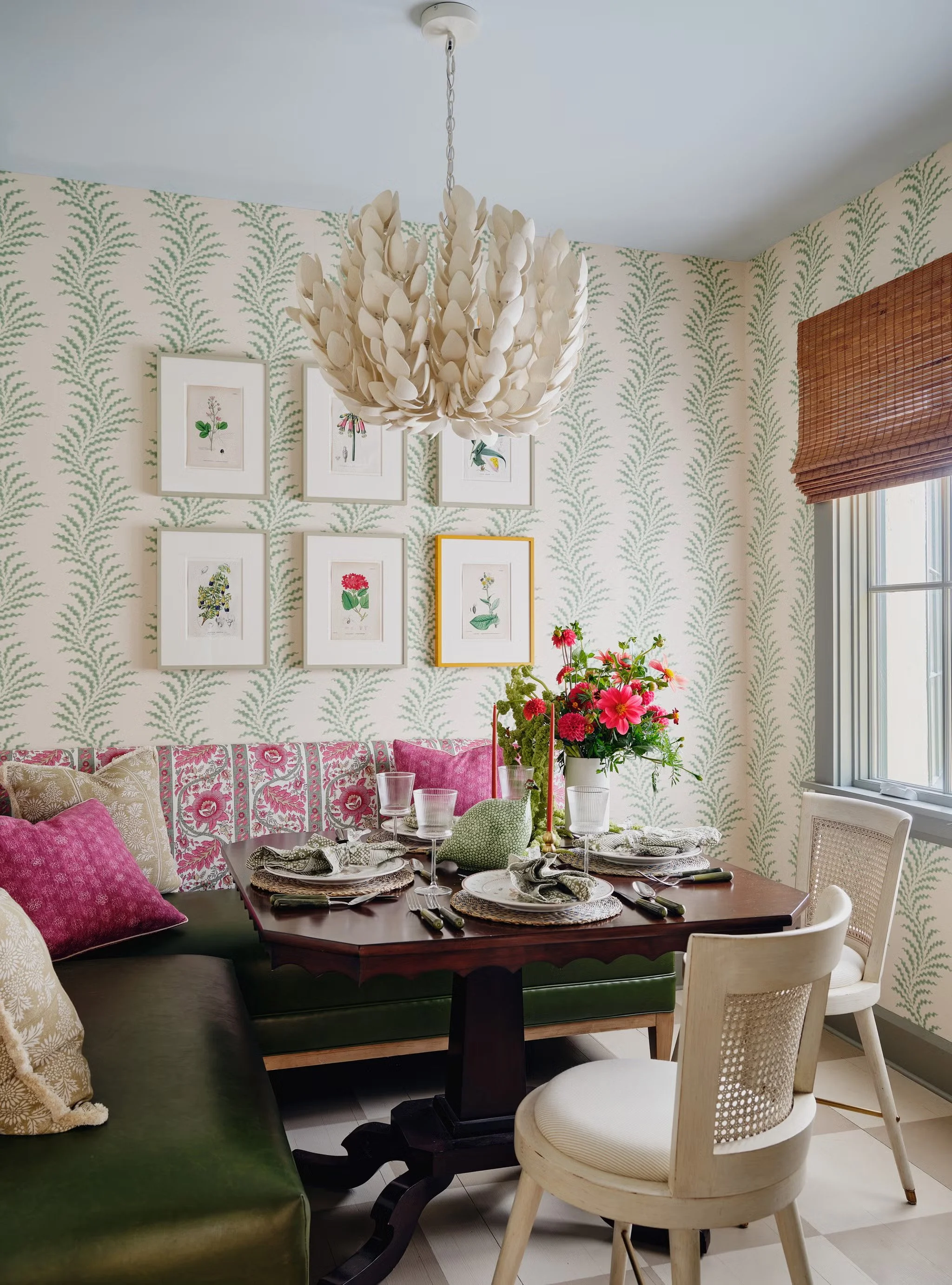
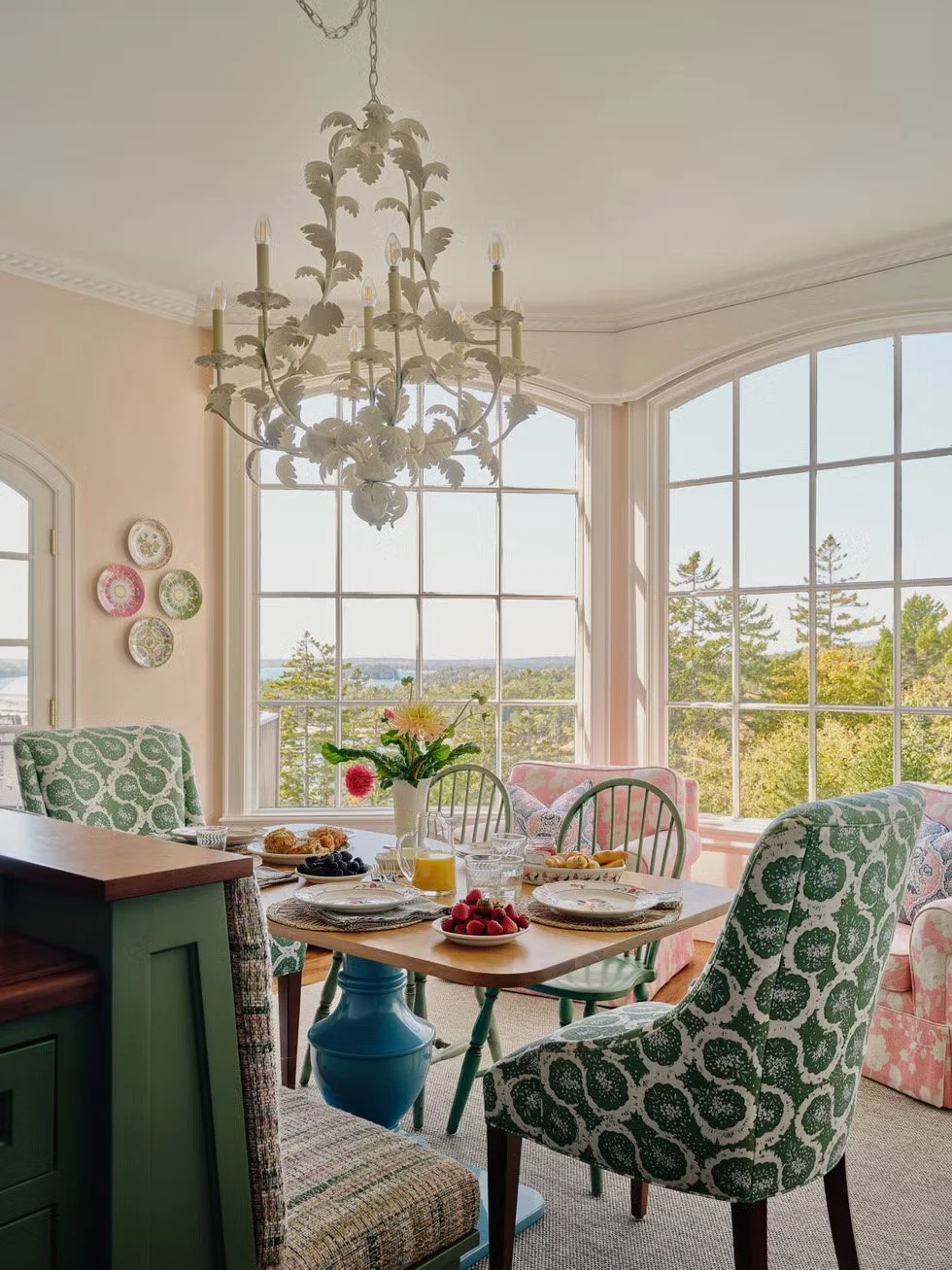
“Hosting has always been central to our family. We were the kind of household where the answer was always to “build a bigger table” and where everyone was welcome,” Pierce says. The breakfast room follows this same ethos, with a built-in banquette that creates comfortable, space-efficient seating.
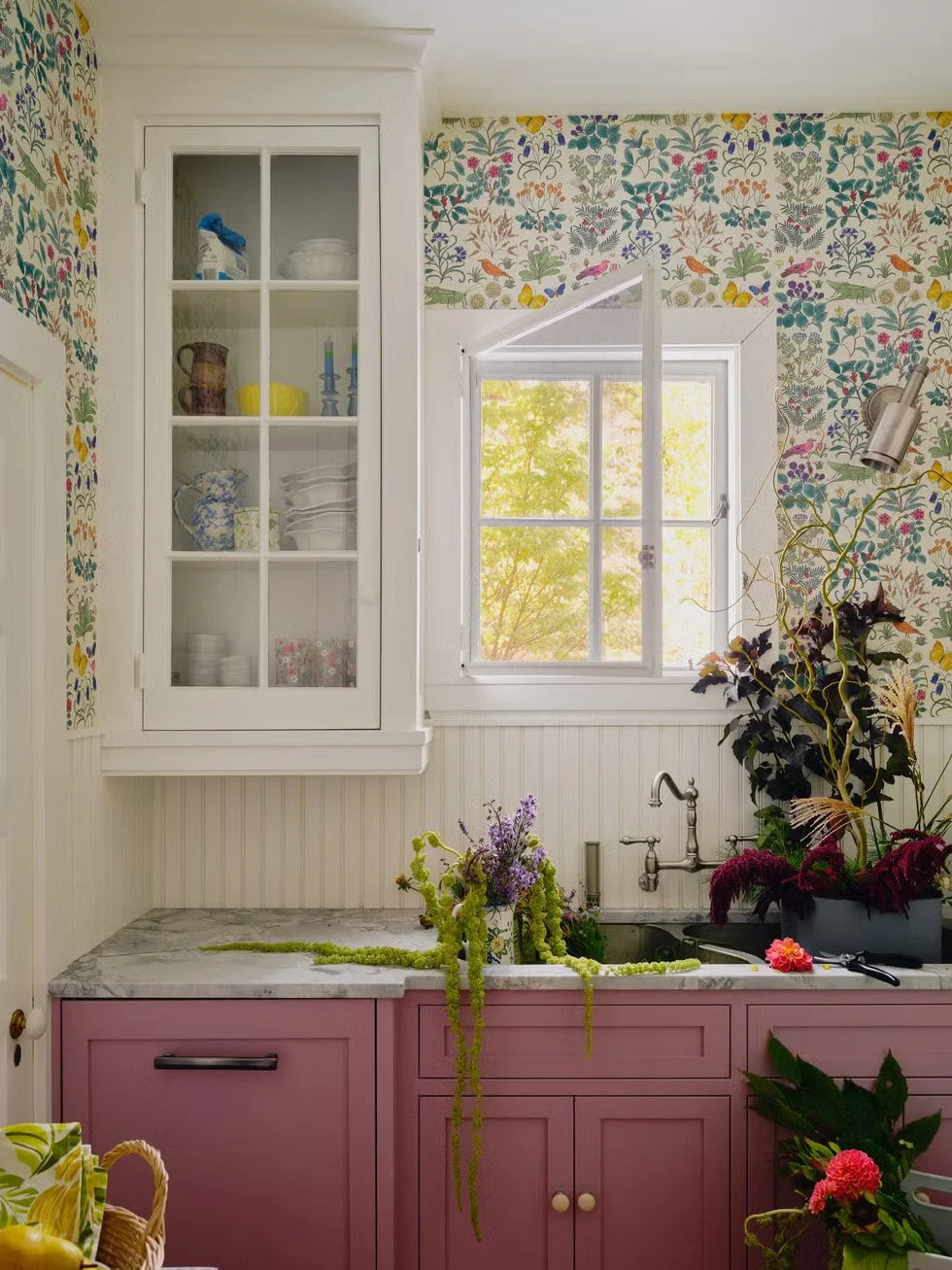
“The main pantry is, in many ways, the bridge between generations,” explains Pierce. The space connects her parents' primary living space with her own family's side of the house, making it one of the most frequently used rooms. The lower cabinets, swathed in Cinder Rose by Farrow & Ball, were a request of her mother’s—though her father wasn’t necessarily keen on the idea. “In the end, we painted the lower cabinets pink and kept the upper cabinetry white, a solution that feels true to all of our styles and a small reminder that the best family homes are built through collaboration,” Pierce adds.
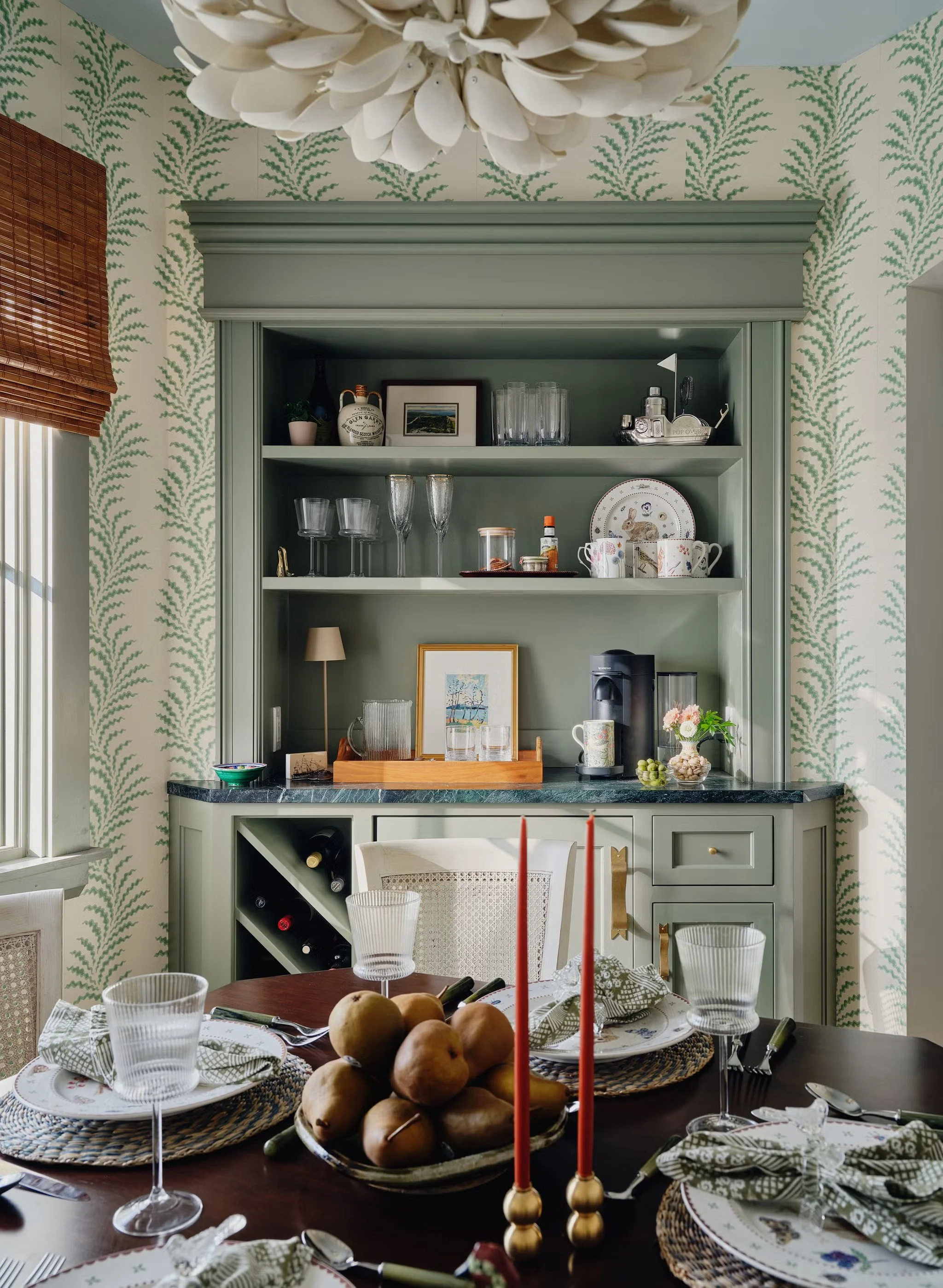
Originally the home’s sitting room, this space was transformed into an oversized dining room, while the adjoining bathroom was reimagined as a wet bar to better support entertaining. The design carefully preserves the room's most significant historic features, including a hand-painted mural and the original ornate ceiling trim. “By layering new functions into the existing architecture, the room balances preservation with modern family life and continues the tradition of gathering around the table,” says Pierce.
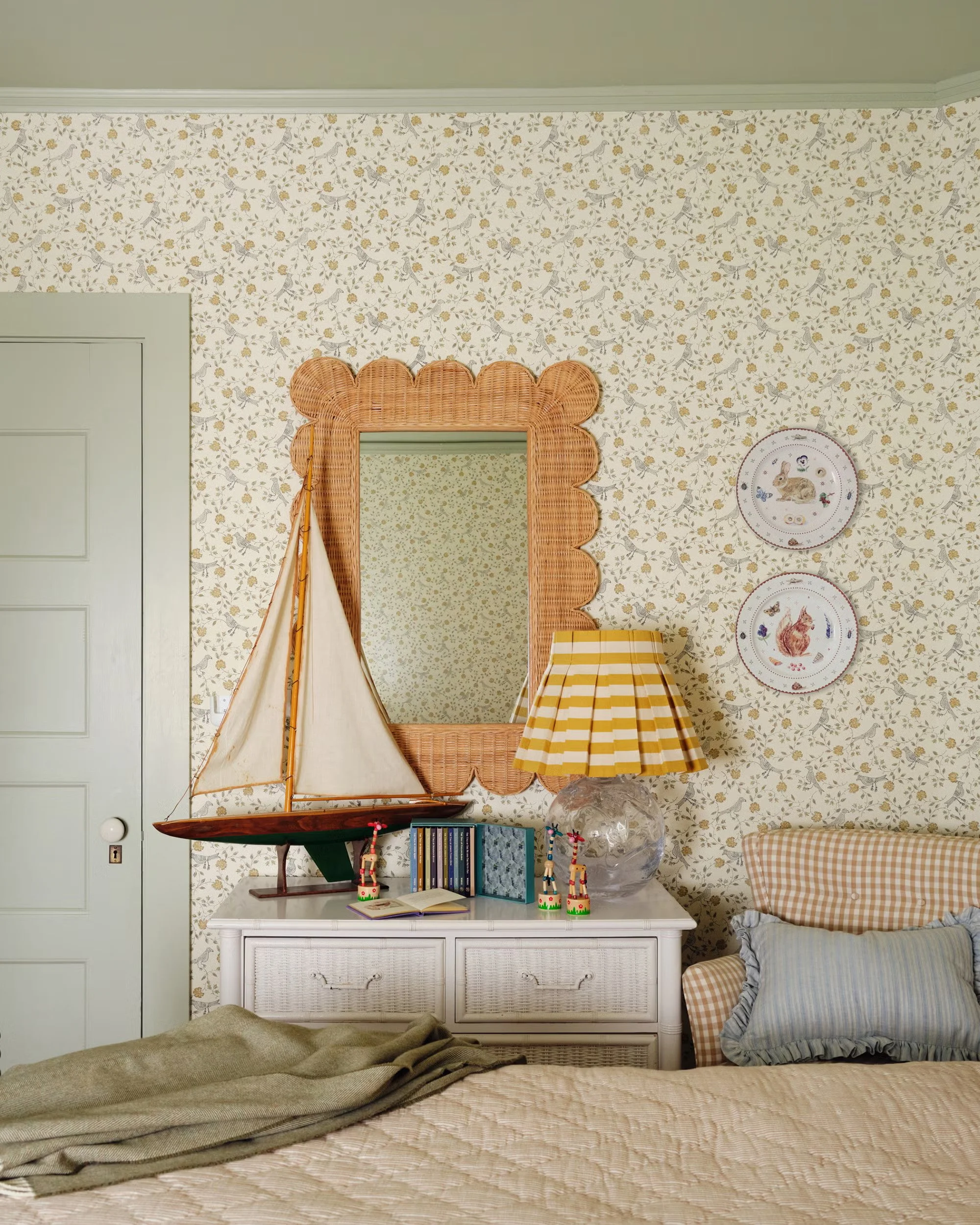
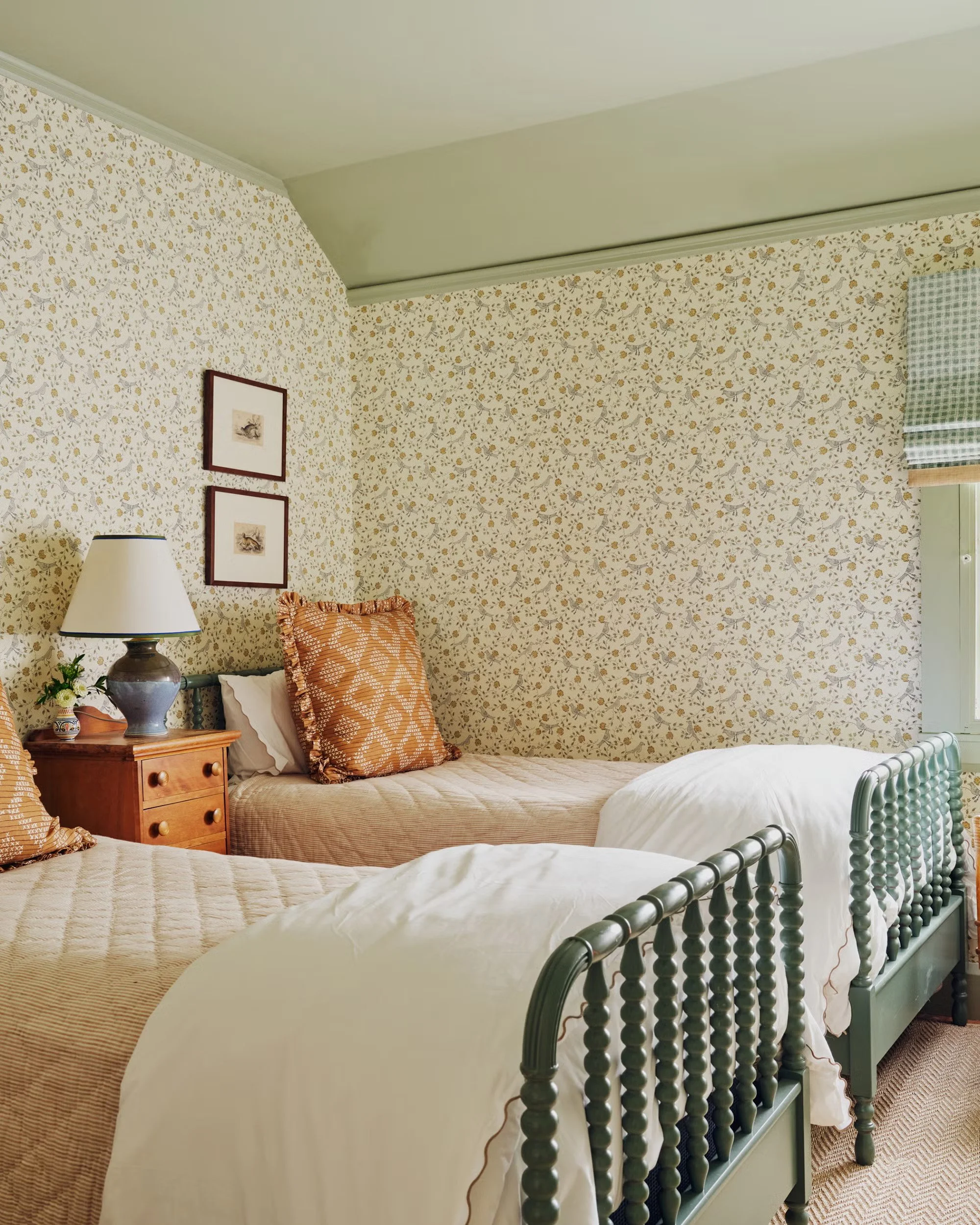
Packed with pattern and outfitted with a flexible sleeping arrangement—the twin beds can be pushed together or used apart—the guest bedroom captures the charm and spirit of the home. “We were fortunate to inherit many of the home's original furnishings, including the twin beds and accent chair, and it felt important to give them a new life rather than replace them,” adds Pierce. “With fresh paint and new cushions, the pieces feel refreshed while remaining completely authentic to the house.”
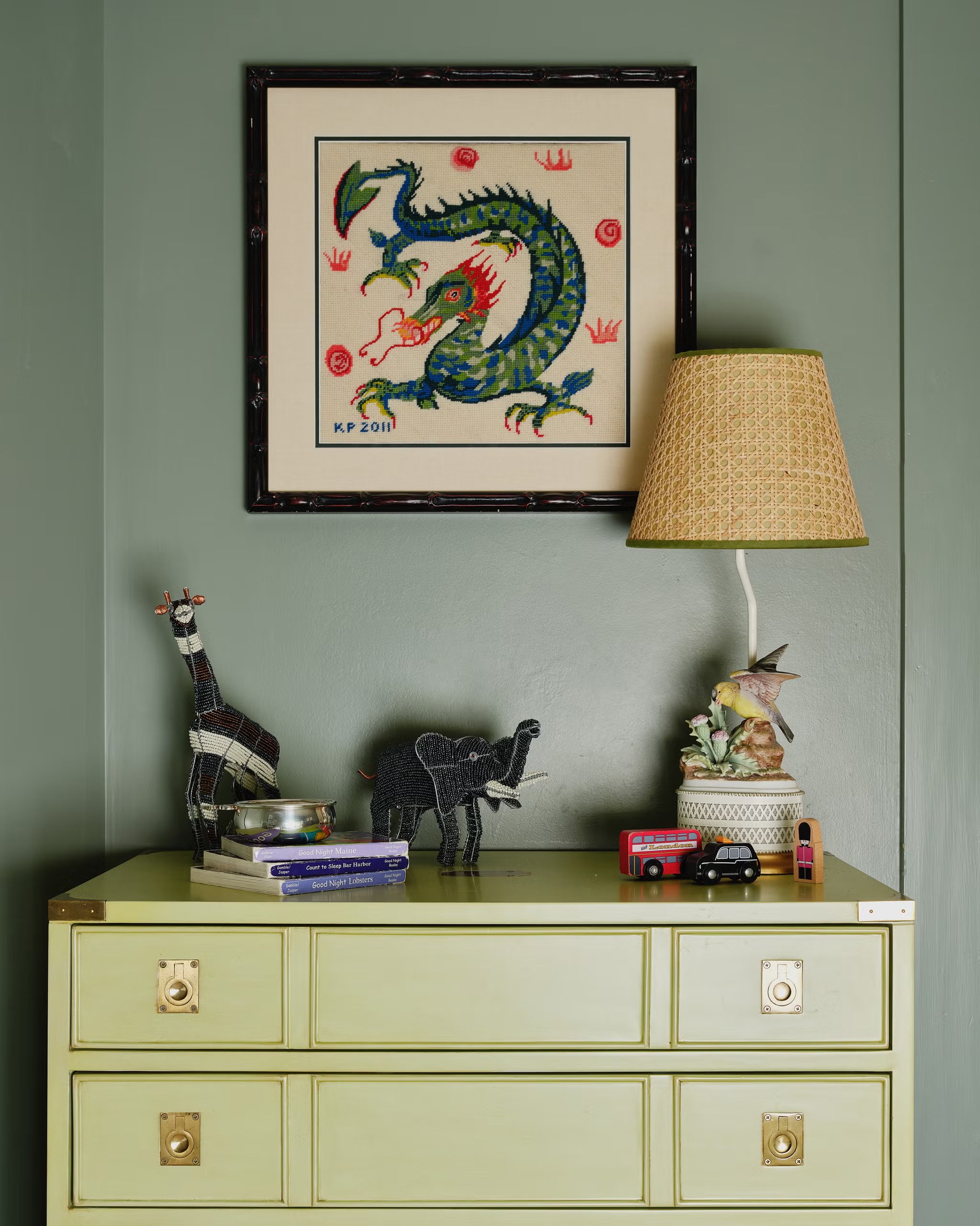
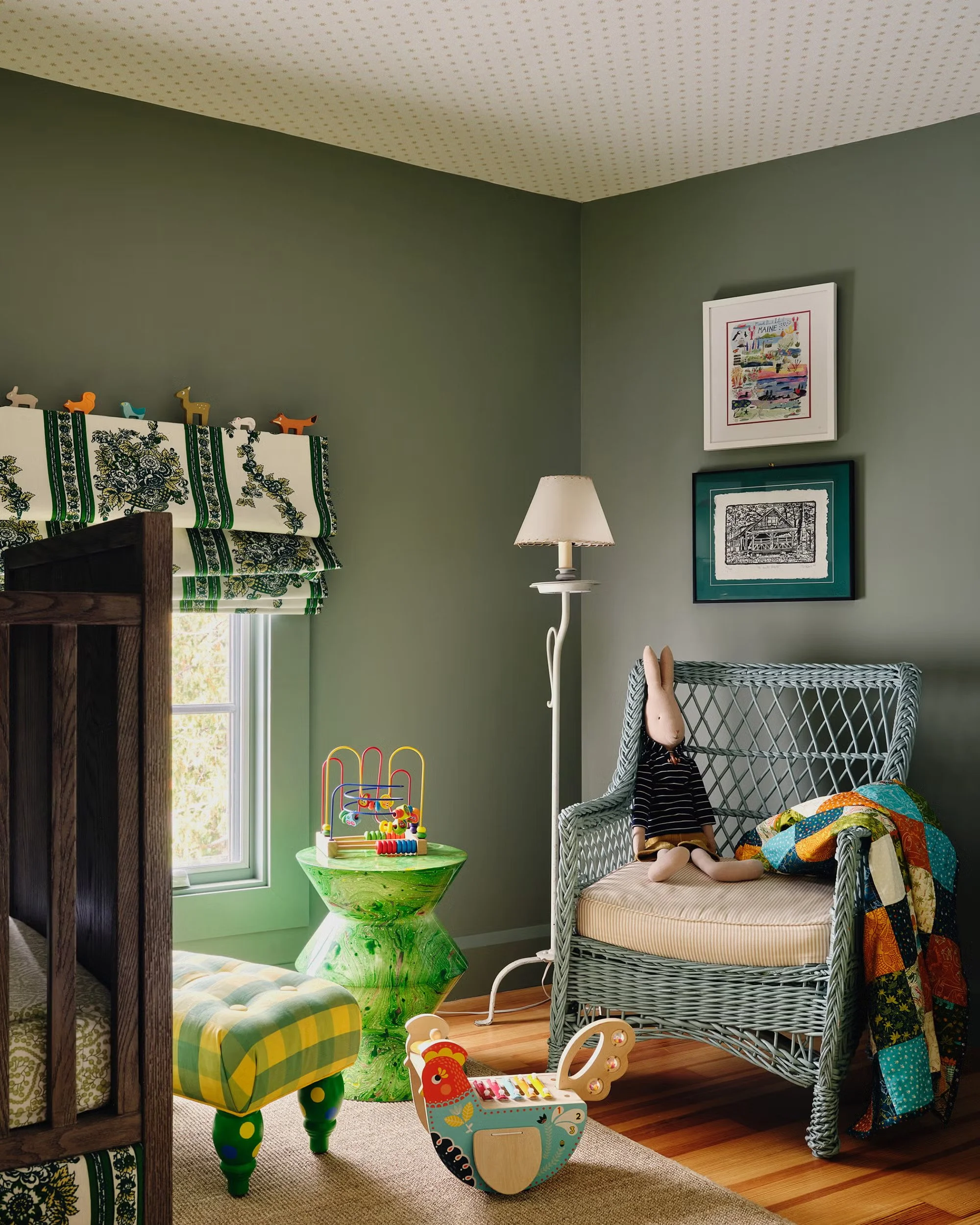
Pierce chose to call attention to the intimate proportions in her son’s room, including a low ceiling and window. “The room embraces a richer palette than many of the surrounding spaces, with deep green walls creating a cozy backdrop for layered patterns, collected artwork, and treasured family pieces,” adds Pierce. “Furnishings were thoughtfully selected to balance function and play, creating a space that can grow alongside him while remaining connected to the character of the house.”
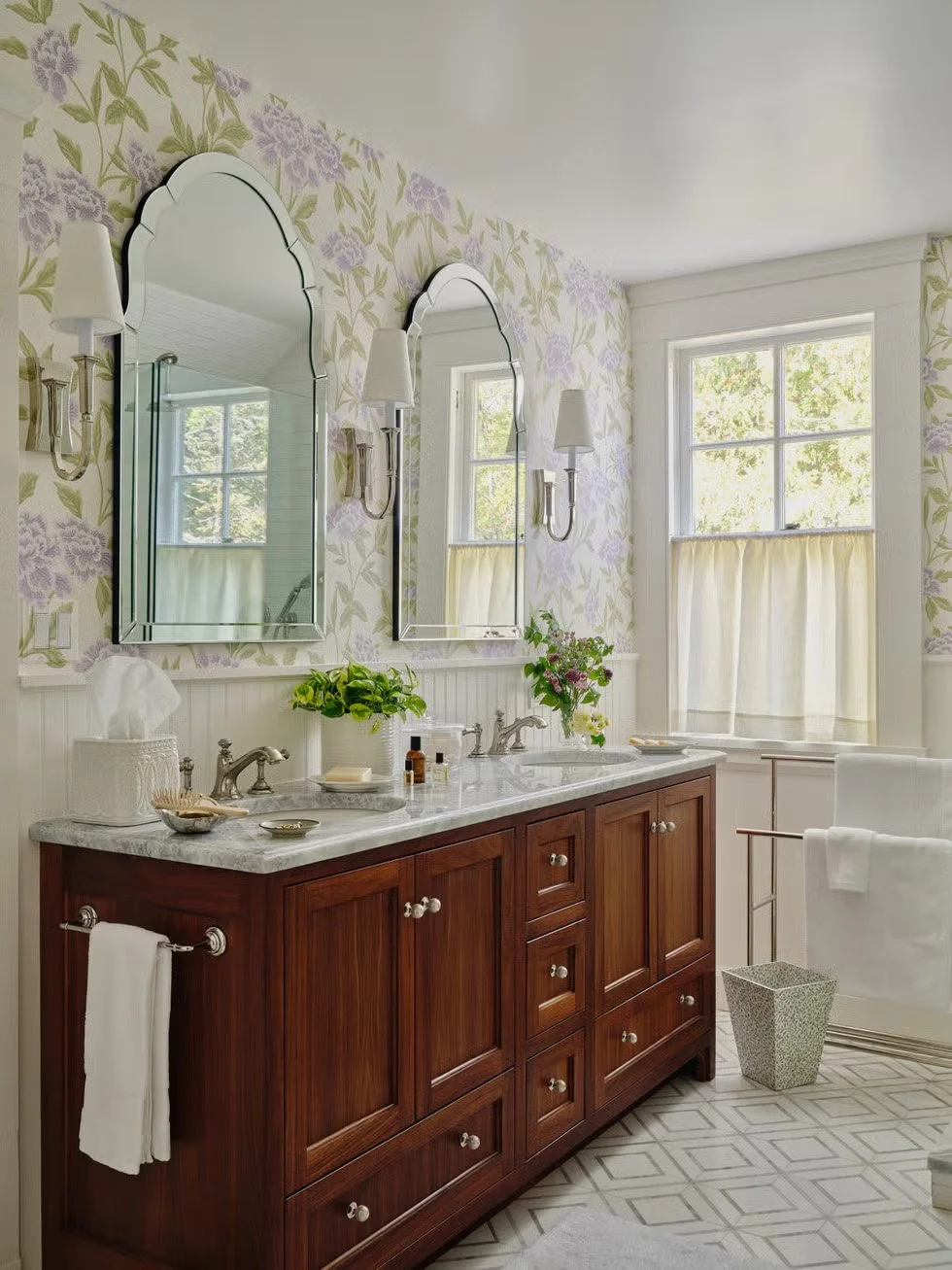
“The primary bathroom for my parents was designed to feel refreshing, serene, and full of light,” says Pierce. “A restrained palette and natural materials create a quiet backdrop, while carefully considered finishes bring texture and warmth to the space.”